| Architecture |
A permissionless mesh of independent operators. Your client tunnels directly to a node you chose — no relay layer, no company in the path. |
One company owns and operates the fleet: 7,000+ servers in 118+ countries, with all traffic passing through corporate infrastructure. |
| Trust model |
Cryptographic. You verify the code and the chain instead of trusting a brand. |
Corporate. You trust a policy document and the audits that check it periodically. |
| Failure mode |
Block one node and traffic reroutes. There is no single entity whose disappearance ends the network. |
A company outage, seizure, sanction or domain block can disconnect every user at once. |
| Logging |
No central database exists to log into. Sentinel: “No company exists that could log your traffic.” |
“No logs” is a legal promise, not a technical guarantee — it stands or falls with the operator’s honesty and the auditor’s sample. |
| Jurisdiction |
The network spans thousands of sovereign operators and jurisdictions. Nothing singular to serve. |
One headquarters, one legal regime — subject to subpoenas, gag orders, NSLs and silent logging orders. |
| Discovery & bootstrap |
Discovery is a chain query against a consensus-protected registry; any RPC endpoint works, and anyone can run one. |
Discovery comes from the vendor’s app config and API endpoints — a finite, blockable surface. |
| Payments |
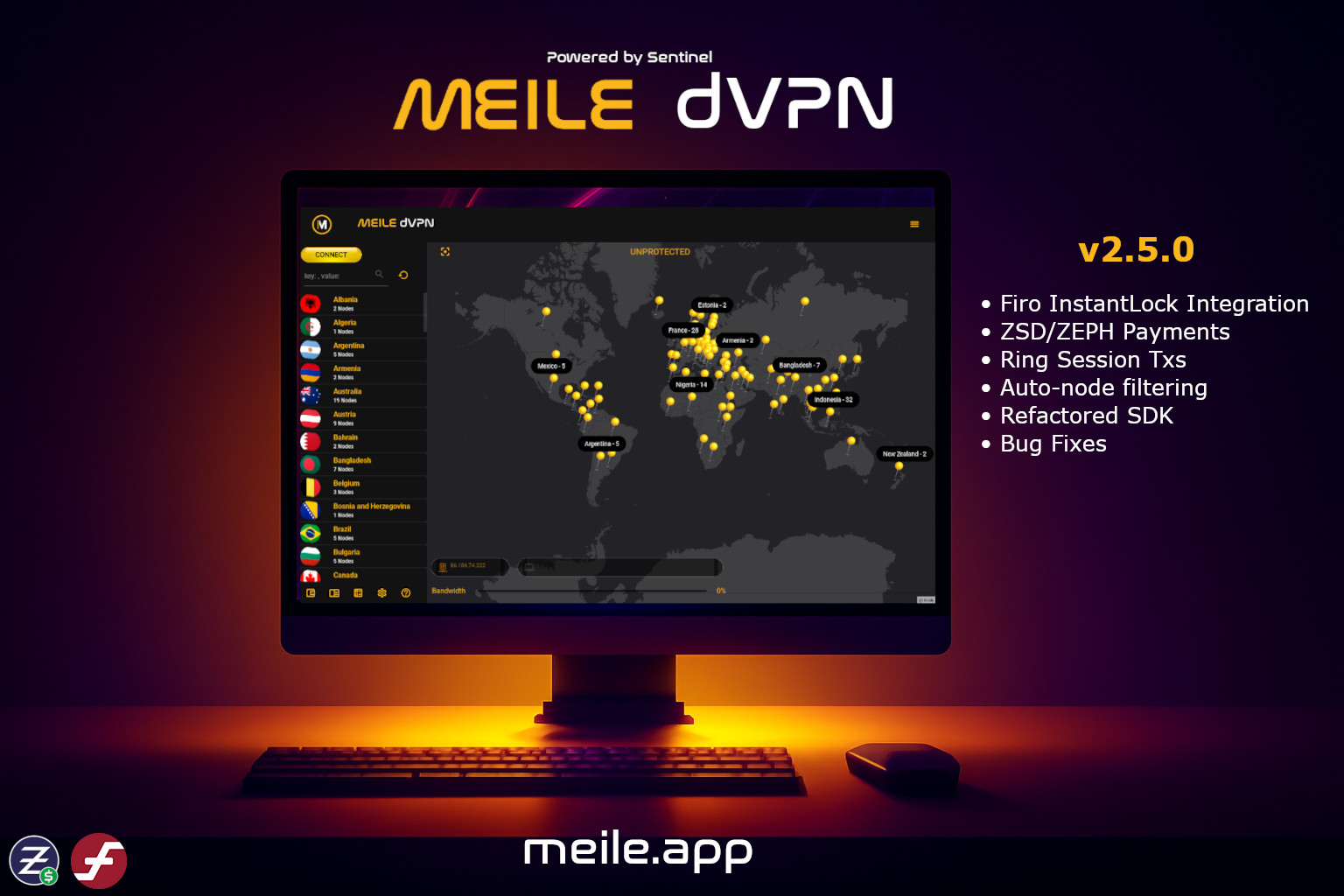
Native tokens ($P2P, $NYM, $ANYONE), plus privacy coins such as Monero (XMR), Zcash (ZEC), Zano, Firo Spark and 300+ others in Meile — paid in-app from a built-in wallet. |
Credit and debit cards, PayPal and regional wallets — with crypto, where offered, routed through a third-party payment processor rather than being native to the product. |
| Identity ↔ usage link |
Meile needs no account and no email. Ring sessions add decoy session transactions, shielded Zcash hides sender, receiver and amount, and multi-hop routing separates your real IP from your destination. |
Your name, billing address, card or PayPal identifier and invoice history persist as a durable record — a billing relationship that maps a human to a subscription and every timestamp on it. |
| Metering |
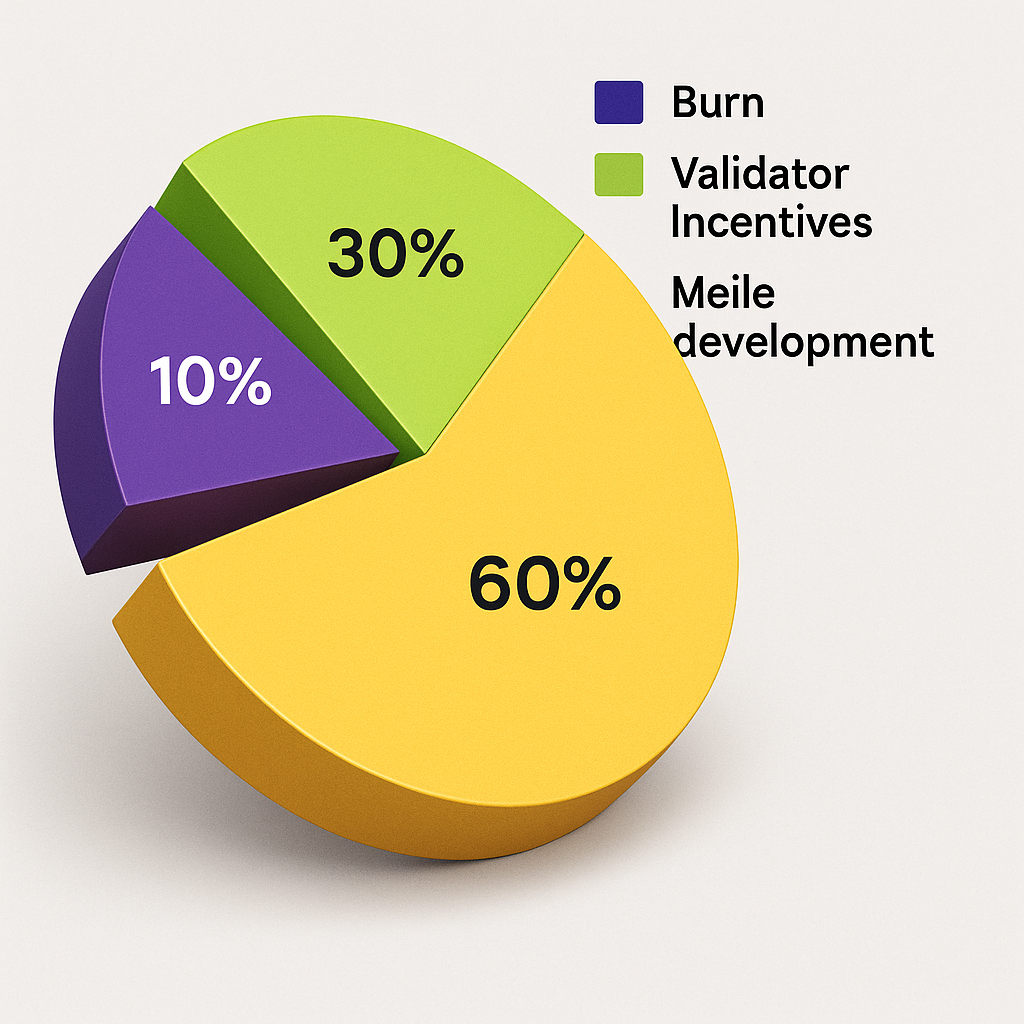
Pay per gigabyte or per hour straight to the node, with the session cost committed on-chain. Meile adds a 4.2069% direct-session fee that is burned, airdropped to delegators and reinvested in development. |
A flat recurring subscription with auto-renewal. Usage is metered internally, if at all, and rarely surfaced to the customer. |
| Auditability |
Node, client, protocols and SDK are open source — anybody can follow the traffic path end to end. |
Server-side software is proprietary and unauditable; independent audits typically cover policy and apps rather than the fleet. |
| Protocols |
Six transports behind one lifecycle — WireGuard, V2Ray, OpenVPN, Xray, AmneziaWG and Hysteria2 — chosen node by node, session by session. |
A small, fixed set of vendor protocols, tuned for a corporate backbone rather than censorship resistance. |
| Governance |
On-chain validator votes. Protocol changes require network consensus. |
A corporate board. Policies can change with a terms-of-service update. |
| Typical price |
Metered from a fraction of a cent per GB. Meile basic is $3.14/month, premium $6/month — payable in crypto, with a 10% surcharge only when not paid in P2P. |
Monthly list pricing sits roughly an order of magnitude higher, discounted steeply when you prepay for one to three years. |
| Speed & consistency |
Variable by nature — you are using somebody’s spare bandwidth. Modern clients add obfuscation (AmneziaWG, Hysteria2, Xray) that punches through throttling. |
Generally faster and more predictable thanks to a purpose-built backbone. The trade-off is centralization. |
| Extras |
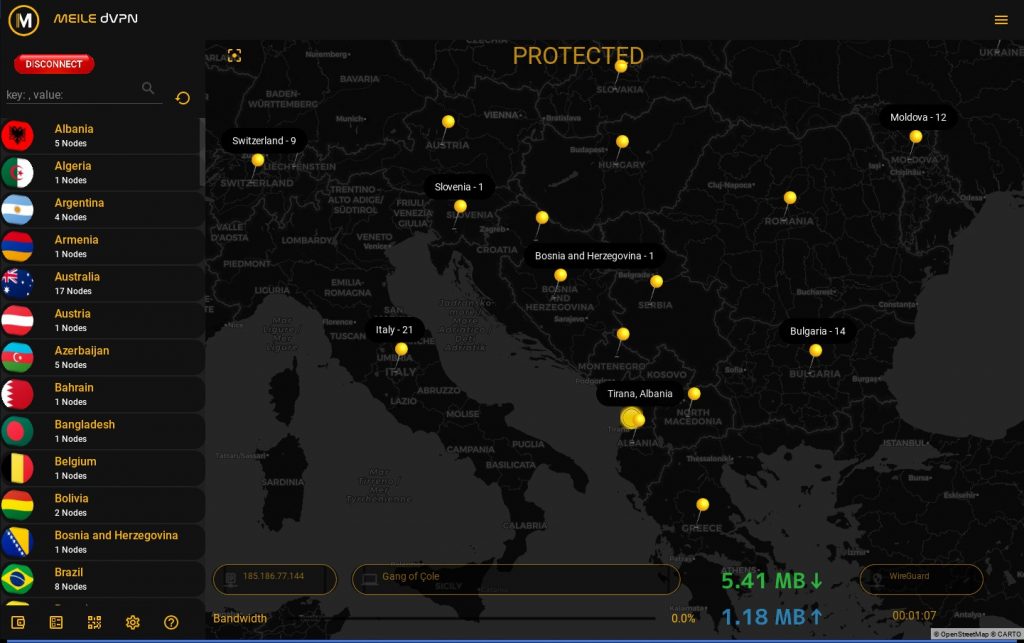
Run a node and earn tokens; in-app node map and node-details page, QR hand-off to Meile Mobile, and community analytics dashboards. |
Tracker and ad blocking, mesh networking, dedicated IP add-ons, 24/7 human support and polished cross-platform apps. |






 GitHub
 PyPI